

How to Save a Life with DRSABCD First Aid
Emergencies can happen anywhere, at work, at home, at sporting events or in public spaces. In those first few minutes after an incident, bystanders often play the most important role and can be responsible for saving a life.
In Australia, the DRSABCD first aid action plan provides a simple way to guide people through responding to medical emergencies. This step-by-step approach helps you assess the situation, identify life-threatening conditions and provide immediate care when it matters most.
Understanding this process can help you remain calm, think clearly and take the right actions in high-stress situations. While learning the steps is important, completing proper training can also help to build the confidence and practical skills you need to respond effectively in a real emergency.
To learn more about how to apply the DRSABCD method, explore the first aid training courses available at First Aid A&E.
What is DRSABCD in First Aid?
DRSABCD stands for:
- D – Danger
- R – Response
- S – Send for help
- A – Airway
- B – Breathing
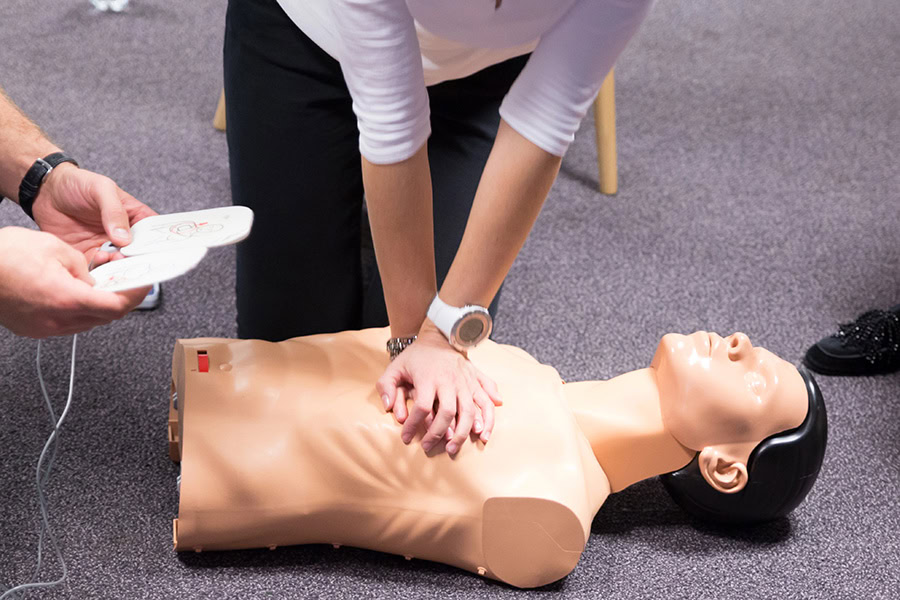
- C – CPR
- D – Defibrillation
Each step guides a first aider through assessing the situation and providing potentially life-saving care until emergency services arrive. The DRSABCD action plan helps ensure that the most critical issues are addressed first, giving a person the best possible chance of survival during a medical emergency.
This method is taught in most accredited first aid courses across Australia and is widely recognised as the standard approach for responding to emergencies.
At First Aid A&E, these steps are taught through practical, hands-on training scenarios designed to help participants build confidence and apply the DRSABCD process in real-life situations.
DRSABCD Method in an Emergency Situation
Emergencies can be chaotic and overwhelming, especially when someone is seriously injured or unresponsive. In these moments, it can be difficult to know what to do first. The DRSABCD method provides a clear and structured way to help people respond quickly and confidently during a medical emergency.
By following the DRSABCD steps, first aiders can focus on identifying and addressing the most life-threatening issues first. This structured approach helps reduce panic and ensures the right actions are taken at the right time.
In situations such as cardiac arrest, early intervention is critical. Performing CPR and using a defibrillator as soon as possible can improve a person’s chances of survival. Knowing what to do in those first few minutes can be the difference between life and death.
DRSABCD First Aid – Step-By-Step
In an emergency, knowing what to do first can be difficult, which is why the DRSABCD first aid process provides a clear step-by-step approach.
D – Danger
This first step is about ensuring safety before helping the casualty.
- Look around for hazards such as traffic, electricity, fire or chemicals
- Make sure the area is safe for you, the casualty and others nearby
- Do not place yourself in danger while trying to help
- If the scene is unsafe, wait until it is safe or call for emergency assistance
Checking for danger first helps prevent further injuries and ensures you can safely provide first aid.
R- Response
The next step is to check whether the person is conscious and responsive.
- Speak to the casualty and ask simple questions such as “Can you hear me?”
- Gently tap or squeeze their shoulders
- Look for any movement, sounds or response
Checking for a response helps determine whether the person is conscious and if urgent medical intervention may be required.
S – Send For Help
If the person is unresponsive or seriously injured, it’s important to get emergency assistance as quickly as possible.
- Call Triple Zero (000) and request an ambulance
- Ask a bystander to call for help if you are assisting the casualty
- If available, ask someone nearby to bring an AED (automated external defibrillator)
Getting professional help on the way early ensures the casualty gets the medical support they need as soon as possible.
A – Airway
Next, check that the casualty’s airway is clear so they can breathe properly.
- Gently open the airway using the head-tilt, chin-lift method
- Look inside the mouth for any visible obstructions
- Remove anything blocking the airway if it is safe to do so
Ensuring the airway is clear allows air to move in and out of the lungs.
B – Breathing
Once the airway is clear, check whether the casualty is breathing normally.
- Look for movement of the chest
- Listen for breathing sounds
- Feel for air from the nose or mouth
If the person isn’t breathing normally or isn’t breathing at all, you should begin CPR immediately.
C – CPR
If the person isn’t breathing, start CPR to help circulate oxygen through the body.
- Begin chest compressions in the centre of the chest
- Perform 30 compressions followed by 2 rescue breaths
- Continue CPR until emergency services arrive or the person starts breathing
Chest compressions should be performed at a rate of 100 – 120 compressions per minute.
D – Defibrillation
If an AED (automated external defibrillator) is available, it should be used as soon as possible.
- Turn on the AED and follow the voice instructions
- Attach the electrode pads to the casualty’s chest as directed
- The AED will analyse the heart rhythm and deliver a shock if needed
AEDs are often found in many public places such as shopping centres, workplaces and sporting facilities.
Why First Aid Training is Essential
Reading about first aid is helpful, but when you experience a real emergency, confidence and practical skills are required. Hands-on training helps you remember the DRSABCD steps and build the muscle memory needed to perform CPR effectively.
Accredited first aid courses also teach you how to stay calm, assess situations quickly and respond appropriately. Through training, you can practise CPR, learn how to use an AED and apply your skills in realistic emergency scenarios.
Explore the accredited first aid training courses at First Aid A&E to gain the knowledge and confidence to help in an emergency.
Where to Learn DRSABCD First Aid
First Aid A&E provides nationally recognised first aid training for individuals, workplaces and community groups. With experienced instructors and practical, hands-on learning, participants gain the skills needed to respond confidently in real emergencies.
Training covers essential techniques such as CPR, AED use and the DRSABCD response process.
First Aid Knowledge That Could Save a Life
Emergencies can happen anytime, and anyone close by can become the first responder. Understanding the DRSABCD process provides the clear steps for taking action when someone needs help.
Enroll in a Gold Coast first aid course with First Aid A&E today!
 Google 5.0

 Construction Defibrillator Bundles