


Defibrillator Maintenance: What YOU NEED TO KNOW
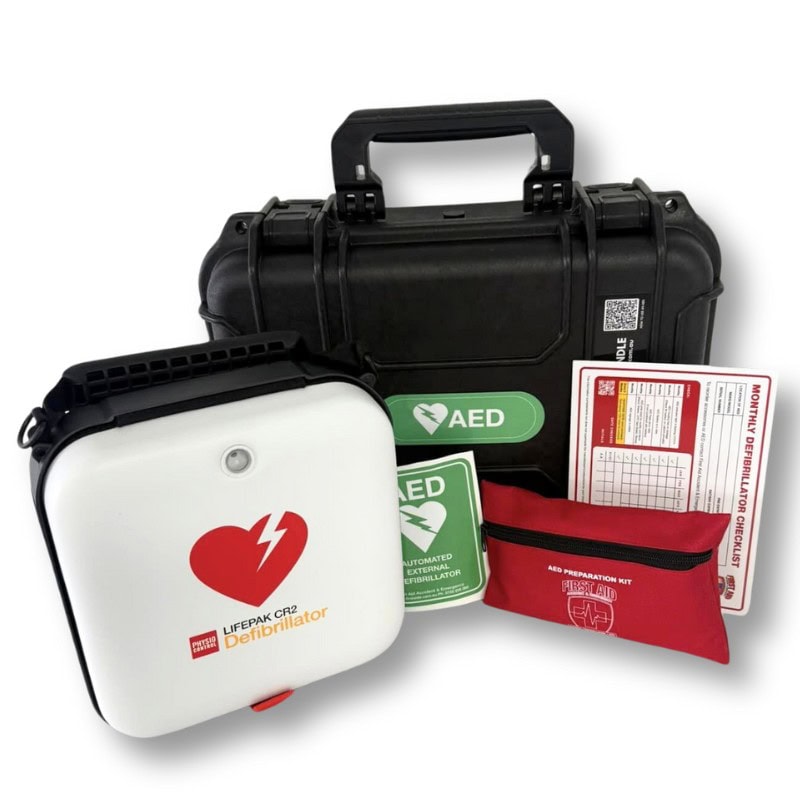
There is growing confusion around defibrillator maintenance in Australia, with some businesses being told that their Automated External Defibrillator (AED) requires annual servicing, energy-output testing or a paid maintenance subscription to remain operational or retain its manufacturer’s warranty.
This is not necessarily the case.
Before allowing any third-party organisation to conduct testing or servicing on your AED, it is important to understand exactly what the manufacturer requires for your specific make and model.
Testing or procedures that are not recommended or authorised by the manufacturer may be unnecessary and could potentially create warranty or device-management issues.
Businesses should always refer to the manufacturer’s instructions, maintenance schedule and warranty conditions before agreeing to third-party servicing, discharge testing or energy-output testing.
What needs to be checked on your Defibrillator?
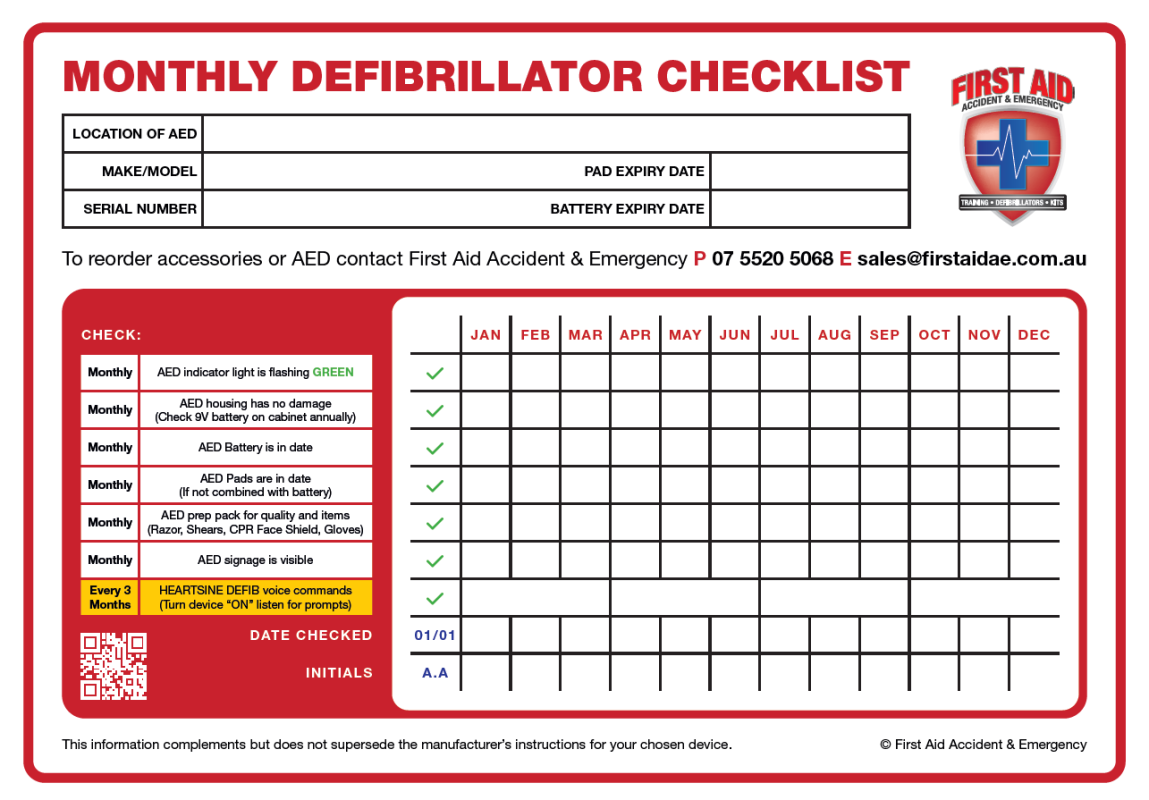
Most Defibrillators require a monthly check to ensure they are in good working order, First Aid Accident & Emergency provides customers with a simple Defibrillator Monthly Maintenance Checklist to help ensure their AED remains ready for use and is being inspected in accordance with the manufacturer’s requirements.
A Monthly AED inspection includes:
- AED status indicator: Confirm that the indicator is in “flashing green LED or in ready mode” or the operational indicator is showing and that the AED is not displaying a warning, fault or error.
- Physical condition: Inspect the AED for visible damage, cracks, contamination or anything else that may affect its operation.
- Battery: Check the battery status is in date and not expired.
- Electrode pads: Confirm the pads are correctly connected, sealed, undamaged and within their expiry date.
- AED preparation kit: Ensure the rescue kit contains essential items such as trauma shears, a razor, gloves and a CPR face shield or barrier device.
- AED signage and accessibility: Make sure the AED is clearly identified, easily accessible and that staff know where it is located.
- Inspection record: Record the date of each inspection and any action taken to maintain a clear history of the AED’s routine checks.
These simple checks can help ensure your AED remains ready to respond when it is needed most.
Modern AEDs Are Designed to Self-Test
Most modern AEDs are designed to perform regular automatic self-tests to monitor the operational status of the device.
Depending on the model, these self-tests can assess important components and alert the owner with a loud beeping sound or a Fault signal if the AED detects a fault, low battery, pad issue or other problem requiring attention.
This means businesses do not need to pay for an annual maintenance program when the required routine checks can be performed internally by a nominated first aider or staff member.
Does My Defibrillator Need Professional Servicing?
Not necessarily — particularly if the manufacturer’s instructions allow you to conduct the routine checks yourself.
Routine inspections can often be completed by a nominated staff member by simply following the manufacturer’s instructions. Businesses should therefore be cautious if contacted unexpectedly by an organisation claiming that an AED must undergo paid annual servicing, electrical testing, discharge testing or energy-output testing to maintain its warranty.
Before allowing a third party to open, test, discharge or otherwise interfere with your AED, ask them to provide:
- The manufacturer’s documentation stating that the proposed service or test is required.
- Confirmation that they are authorised and appropriately qualified to perform that procedure on your specific AED make and model.
- Confirmation that the proposed testing will not adversely affect the manufacturer’s warranty.
- A clear explanation of exactly what testing will be performed and why it is required.
Do not assume that because an organisation offers an AED servicing program, that service is required by the manufacturer.
Does my Defibrillator need energy checks to be in warranty.
No, in most cases, Public access Automated External Defibrillators (AED’s) do their own self-check, the confusion lays with Advance Life Support (ALS) Defibrillator models where a medically trained professional can manually adjust the Joules of the device to shock a patient at a higher energy output, only these devices should be checked for energy output.
Be Cautious of Claims That Your AED Is Faulty or Recalled
AED owners should also be cautious if they are told that their defibrillator is faulty, requires immediate replacement or is affected by a product recall.
We have become aware of situations where AED owners have reportedly received this type of advice, only to later discover that the information did not apply to their particular device.
If you are told that your AED is affected by a recall or other product action, do not automatically assume that your device needs to be replaced.
Recall and product-action notices may apply only to particular models, serial-number ranges, batches or manufacturing periods.
Any claim involving a recall should therefore be independently verified using the AED’s make, model and serial number.
You can contact First Aid Accident & Emergency on (07) 5520 5068 for assistance, or verify the information directly with the manufacturer, supplier or relevant Australian regulatory information.
Businesses should also be cautious if advised replacing electrode pads or batteries significantly before their scheduled expiry or replacement dates unless there is a genuine manufacturer requirement, product issue or identified fault.
Similarly, before entering into an annual AED maintenance subscription, ask exactly what service is being provided and whether the manufacturer actually requires it for your particular AED.
A defibrillator is a critical piece of emergency equipment. Decisions about whether it is operational, faulty or requires replacement should be based on manufacturer requirements and verified information — not unnecessary sales pressure.
Signage: AEDs Must Be Easy to Find
Having an AED available is only effective if people can quickly locate and retrieve it during a cardiac arrest.
Where an AED is installed within a workplace, its location should be clearly identified and incorporated into the organisation’s overall first aid arrangements.
Appropriate signage — including clearly visible A4 AED signage or three-dimensional wall signage — can help staff, visitors and members of the public quickly identify the location of the defibrillator.
The AED should also remain readily accessible and should not be hidden away in a locked office, cupboard or other location that could delay access during an emergency.
Every minute matters during cardiac arrest, so AED visibility and accessibility are critical.
Don’t Pay for AED Maintenance You Don’t Need
If you are told that your defibrillator requires paid servicing or energy-output testing to maintain its warranty, check the manufacturer’s requirements and contact the organisation you purchased the AED from before proceeding.
Ask questions before allowing anyone to perform testing on your AED or replace components that may not yet require replacement.
At First Aid Accident & Emergency, we help organisations understand their AED maintenance requirements and provide practical maintenance checklists so routine inspections can be conducted internally where appropriate.
Our focus is simple:
Maintain your defibrillator in accordance with the manufacturer’s requirements, keep its battery and electrode pads within their required replacement periods, make sure it is clearly visible and accessible, and ensure it is ready to help save a life when it is needed most.
If you have questions about AED maintenance, electrode pad or battery replacement, warranty requirements, product recalls or whether a proposed servicing program is actually necessary, contact the team at First Aid Accident & Emergency on (07) 5520 5068 for advice.
 Google 5.0

 Construction Defibrillator Bundles