


Defibrillators on Electrical Sites: A Smart Safety Move for Contractors
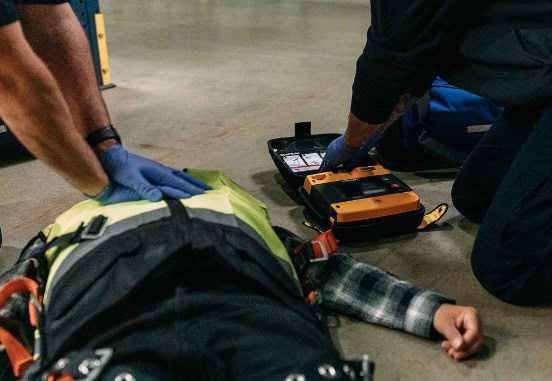
Electrical contractors work in one of the highest-risk trades in Australia. As electricians, you are exposed to live electrical currents, confined spaces, and physically demanding work in hot and remote locations. The risks for electricians can be life-threatening. One of the most serious dangers on electrical worksites is sudden cardiac arrest, which can occur without warning and requires instant action.
Defibrillators (AEDs) may not be mandatory for all Australian worksites, but they are strongly recommended for electrical contractors. They are an essential piece of safety equipment.
Why do electrical contractors face a higher cardiac risk?
Exposure to electric shock can directly impact the heart’s rhythm, which increases the risk of cardiac arrest. Many electrical contractors work long hours, perform physically demanding jobs, and operate in hot or high-pressure environments, all factors that place strain on the cardiovascular system.
And cardiac arrest doesn’t just affect older workers or individuals with previous health conditions. It can happen randomly to seemingly fit and healthy people. If an incident occurs, every minute without defibrillation significantly reduces the chance of survival.
Having an automated external defibrillator (AED) on-site can literally mean the difference between life and death.
How defibrillators save lives
If you’re not familiar with defibrillators, they are portable devices designed to analyse the heart’s rhythm and, if needed, deliver a shock to restore a normal heartbeat. Modern defibrillators are built for use by everyday people, not just medical professionals.
They work by giving clear voice prompts that guide users step-by-step, only delivering a shock if it’s needed. They are a good option for worksites where medical help may not be immediately available.
When used with CPR, early defibrillation is one of the most effective responses to sudden cardiac arrest. For electrical contractors working on construction sites, in commercial buildings, or in remote locations, having fast access to an AED can dramatically improve outcomes in an emergency.
Do you need a defibrillator on Australian worksites?
At the moment, Safe Work Australia doesn’t mandate defibrillators for electricians. But they are recommended as part of best-practice first aid planning, especially in high-risk industries electrical trades.
Work health and safety legislation requires employers to assess risks and provide appropriate first aid equipment. For electrical contractors, especially those working in teams or isolated environments, this risk assessment increasingly supports the addition of an AED.
Many principal contractors, large construction firms, and commercial clients now expect AEDs to be available on-site, so they aren’t just a safety measure, but standard.
AEDs for electrical contractors
6 reasons why defibrillators are becoming standard safety equipment for electrical contractors:
- Electrical shock increases cardiac risk
- Emergency response times can be delayed on large or remote sites
- AEDs are simple to use and require minimal training
- They support compliance with WHS risk management obligations
- They demonstrate a genuine commitment to worker safety
Portable defibrillators for worksites and vehicles
Portable defibrillators have many benefits. They can be safely stored in work vehicles, in site offices or tool sheds, so they are accessible to all. Many electrical contractors choose compact, rugged AED models designed for harsh environments. These devices are built to withstand dust, heat, and movement.
When combined with regular first aid training, including CPR, a defibrillator becomes a powerful tool. They aren’t just another item on a safety checklist, they are an investment. It shows workers that their well-being matters and provides peace of mind for employers, employees and clients.
Training and maintaining your defibrillators
Our first aid courses that include CPR and defibrillator training will help to ensure your employees know what to do in an emergency. At First Aid Accident & Emergency, we have First Aid and CPR courses that are in line with Resuscitation Council (ARC) guidelines.
Ongoing maintenance is also essential for defibrillators. They require periodic checks to ensure batteries and pads are in date, and the device is operational.
Frequently asked questions about AEDs
Where can electricians buy defibrillators online?
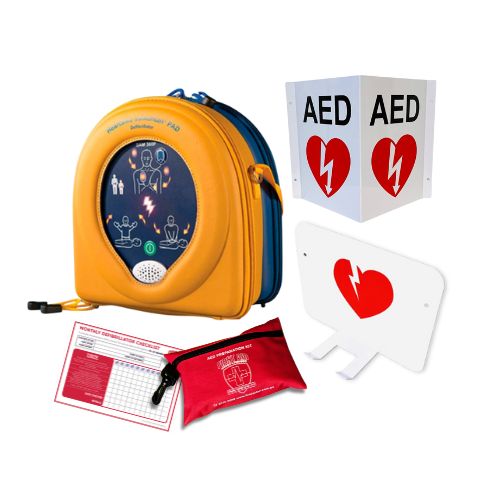
At First Aid Accident & Emergency, you can buy high quality defibrillators, defibrillator bundles and defibrillator accessories suitable for electrical contractors and Australian worksites. We also provide first aid training and support to help you meet your safety obligations and be prepared for emergencies.
 Google 5.0

 Construction Defibrillator Bundles